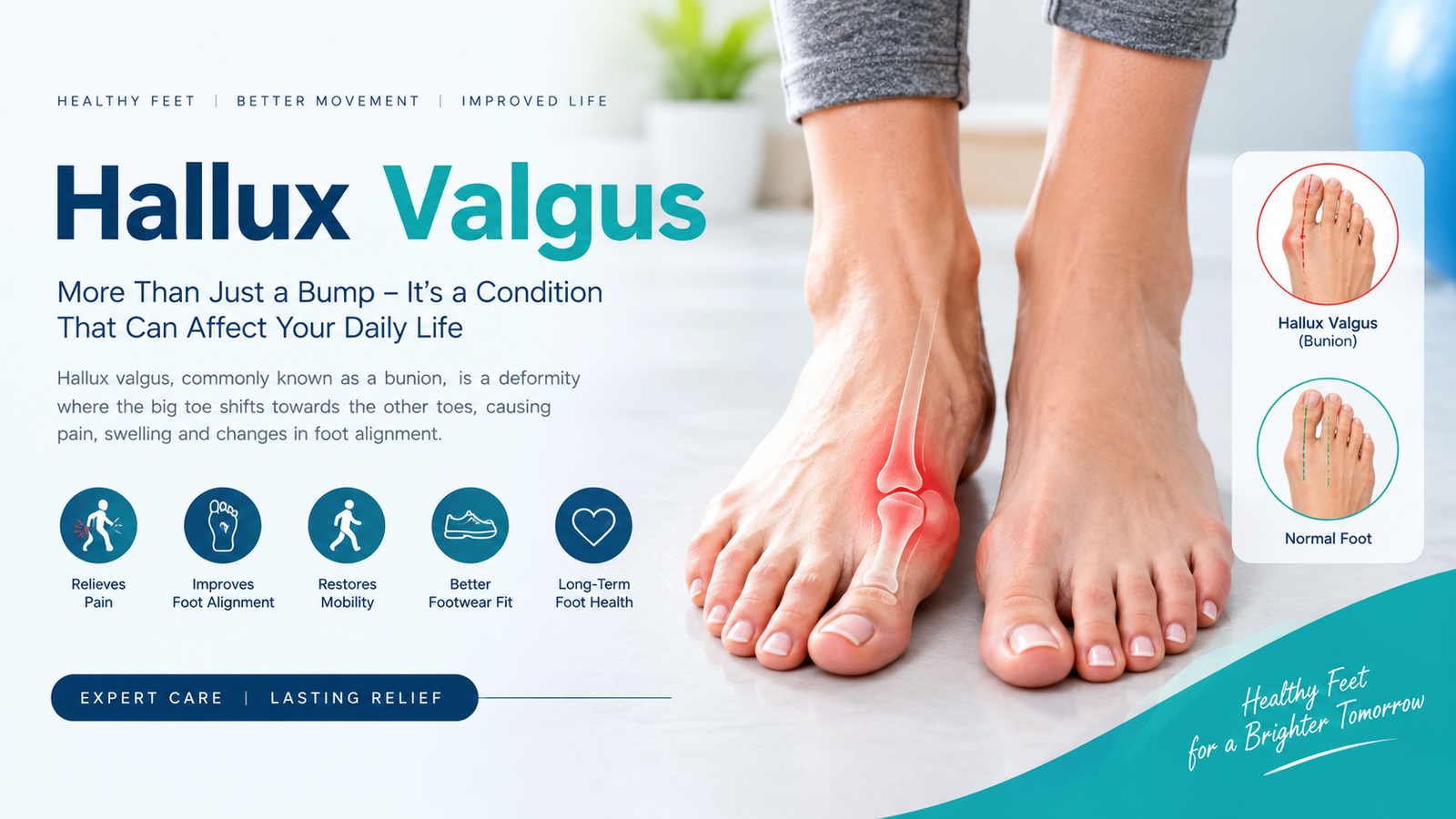
Foot Hallux Valgus is something many people overlook until discomfort begins affecting their daily activities. Whether you’re walking to work, exercising, or simply standing for long periods, your feet support your body throughout the day. When a condition changes the natural alignment of your toes, even ordinary movements can become uncomfortable. One common condition responsible for this problem is Hallux Valgus, often referred to as a bunion.
Hallux valgus is a foot deformity in which the big toe gradually shifts toward the smaller toes, causing the joint at the base of the big toe to become more prominent. This change can create a noticeable bump along the inner side of the foot. While some people experience little or no discomfort, others develop persistent pain, swelling, difficulty finding comfortable shoes, and limitations in their daily activities.
The good news is that hallux valgus can often be managed successfully, particularly when people recognize symptoms early and choose appropriate footwear and treatment strategies. Although nonsurgical treatments cannot usually reverse the underlying bone alignment, they can help reduce discomfort and improve everyday function. Understanding the causes, symptoms, diagnosis, and available treatment options can help you make informed decisions about your foot health.
What Is Hallux Valgus?
Hallux valgus is a structural deformity affecting the first metatarsophalangeal joint, which connects the big toe to the first metatarsal bone in the foot. In a normally aligned foot, the big toe generally points forward. With hallux valgus, the big toe gradually angles toward the second toe, while the first metatarsal bone may shift inward relative to the rest of the foot. This combination creates the characteristic prominence commonly called a bunion.
The term itself comes from medical terminology. “Hallux” refers to the big toe, while “valgus” describes an outward angulation of the toe relative to the body’s midline. Although people often use the words bunion and hallux valgus interchangeably, they describe slightly different aspects of the problem. Hallux valgus refers to the abnormal alignment, while a bunion refers to the visible or palpable prominence around the joint.
This condition can affect one foot or both feet, and its severity varies considerably. Some individuals develop a small bump that remains relatively painless, while others experience progressive deformity and discomfort. Hallux valgus is more common among adults, particularly women, but it can also occur in younger people. Understanding the structural changes involved is important because the condition is not simply a skin problem or an isolated swelling.
Common Causes of Hallux Valgus
Hallux valgus usually develops through a combination of inherited foot characteristics, biomechanical influences, and environmental factors. Genetics plays a particularly important role because certain foot shapes and joint structures can run in families. If close relatives have bunions, you may have an increased likelihood of developing the condition, although family history does not guarantee that it will occur.
Footwear can also influence symptoms and may contribute to the progression of an existing deformity. Shoes with narrow toe boxes compress the toes, while high heels shift pressure toward the front of the foot. Over time, these conditions can make an already vulnerable joint more uncomfortable. However, it would be inaccurate to suggest that tight shoes alone cause every bunion, since people who regularly wear spacious footwear can also develop hallux valgus.
Other contributing factors may include joint instability, abnormal foot mechanics, and certain inflammatory or connective tissue conditions. Rheumatoid arthritis, for example, can affect the structures that maintain normal joint alignment. Some people also develop hallux valgus during adolescence, often in association with inherited anatomical characteristics. Because multiple factors may be involved, identifying a single cause is not always possible.
Early Signs and Symptoms of Hallux Valgus
One of the earliest signs of hallux valgus is a noticeable bump along the inner side of the foot near the base of the big toe. Initially, the bump may be small and painless, making it easy to ignore. As the deformity becomes more pronounced, the big toe may begin leaning toward the second toe, changing the appearance of the front of the foot.
Pain and tenderness around the big toe joint are common symptoms, especially when wearing tight or restrictive shoes. Some people experience redness, swelling, or irritation over the bunion because the prominent joint rubs against footwear. Others notice discomfort after standing or walking for extended periods. The intensity of pain does not always correspond directly to the size of the deformity, meaning a relatively small bunion can sometimes be more painful than a larger one.
Hallux valgus may also cause secondary problems involving neighboring toes. As the big toe shifts, it can crowd the second toe and contribute to overlapping toes, calluses, or hammertoe deformities. Changes in weight distribution may cause discomfort beneath the ball of the foot, particularly under the lesser metatarsal heads. These symptoms can gradually interfere with exercise, walking, and the ability to wear ordinary shoes comfortably.
Different Stages and Severity of Hallux Valgus
Healthcare professionals often describe hallux valgus according to its severity, which may be classified as mild, moderate, or severe. These categories generally reflect the degree of abnormal alignment visible on clinical examination and weight-bearing foot X-rays. Doctors may measure the hallux valgus angle and the angle between the first and second metatarsal bones to understand the structural changes.
In mild cases, the big toe shows a relatively small deviation, and the joint prominence may cause occasional irritation. Many people at this stage can manage symptoms through comfortable footwear and adjustments to daily activities. However, even a mild deformity deserves attention if pain persists or begins affecting mobility. Early assessment can help distinguish hallux valgus from other conditions that produce similar symptoms.
Moderate and severe cases involve greater displacement of the big toe and potentially more significant changes in joint alignment. Severe deformities may cause substantial crowding of neighboring toes, difficulty finding suitable footwear, and altered walking mechanics. Nevertheless, treatment decisions should not depend on X-ray measurements alone. Pain, physical function, joint flexibility, general health, and personal goals are equally important when determining the most appropriate approach.
Who Is Most Likely to Develop Hallux Valgus?
Hallux valgus can occur in people of different ages and backgrounds, but certain groups have a higher likelihood of developing it. The condition is particularly common among women and becomes more prevalent with increasing age. Researchers have identified associations involving inherited foot structure, footwear habits, and changes in the joints and supporting tissues over time.
Individuals with a family history of bunions may be more susceptible because anatomical characteristics influencing foot alignment can be inherited. People with certain joint disorders, including inflammatory arthritis, may also face an increased risk of developing deformities around the big toe. These conditions can affect joint stability and the soft tissues that help maintain normal alignment.
Occupations and activities involving prolonged standing or restrictive footwear may aggravate symptoms in susceptible individuals. However, hallux valgus is not limited to people who wear fashionable shoes or spend many hours on their feet. Athletes, office workers, older adults, and adolescents can all develop the condition. Recognizing that bunions have multiple contributing factors helps avoid blaming individuals for a problem that may be strongly influenced by their anatomy.
How Doctors Diagnose Hallux Valgus
Diagnosing hallux valgus usually begins with a physical examination and a discussion of symptoms. A healthcare professional will examine the position of the big toe, the prominence around the joint, and any associated swelling or tenderness. They may also assess joint movement, the alignment of neighboring toes, and the presence of calluses or pressure-related skin changes.
Weight-bearing X-rays are commonly used when detailed assessment is needed, particularly if surgery is being considered. These images show how the bones align while the foot supports body weight. Doctors can use the measurements to evaluate the deformity, identify joint changes, and determine whether arthritis or other structural abnormalities are present. Not everyone with a painless bunion requires imaging.
A proper diagnosis also involves ruling out other causes of big toe pain. Conditions such as gout, osteoarthritis, inflammatory arthritis, and certain injuries can produce symptoms around the same joint. Sudden severe pain, marked warmth, redness, or fever may indicate a problem that requires prompt medical assessment rather than routine bunion management. An accurate diagnosis ensures that treatment addresses the actual cause of discomfort.
Nonsurgical Treatment Options for Hallux Valgus
Most people with hallux valgus begin with conservative treatment, especially when symptoms are mild or moderate. The main goal is to relieve pain, reduce pressure on the affected joint, and improve comfort during everyday activities. Nonsurgical treatment cannot reliably restore normal bone alignment, but many people manage their symptoms without requiring an operation.
Footwear modification is often the first and most effective step. Shoes with a wide toe box, low heel, supportive sole, and soft upper material can reduce pressure on the bunion. Protective pads may also help prevent rubbing, while properly fitted shoe inserts can redistribute pressure across the foot. Toe spacers sometimes provide temporary comfort, although they cannot permanently straighten a structurally misaligned big toe.
Pain management may involve short periods of rest, applying a wrapped cold pack, and using appropriate pain-relieving medication. Anti-inflammatory medicines such as ibuprofen can help some individuals, but they are not suitable for everyone, particularly people with certain kidney, stomach, or cardiovascular conditions. A healthcare professional can recommend the safest approach based on individual medical history. According to the American Academy of Orthopaedic Surgeons, many patients obtain relief through these relatively simple measures.
Best Shoes for People With Hallux Valgus
Choosing appropriate footwear can make a noticeable difference when living with hallux valgus. The most important feature is sufficient space around the toes. A shoe should accommodate the natural width of the forefoot without squeezing the big toe against its neighbors. This reduces friction over the bunion and helps prevent unnecessary pressure during walking.
Soft, flexible upper materials can also improve comfort because they adapt more easily to the shape of the foot. However, the shoe should still provide adequate stability through the heel and midfoot. A low heel is generally preferable because high heels increase pressure toward the front of the foot, potentially aggravating discomfort around the affected joint.
When buying shoes, try them on while standing and check that your toes can move comfortably. Because feet may swell during the day, shopping later in the afternoon can help you assess fit more realistically. Avoid purchasing shoes that feel tight with the expectation that they will eventually stretch enough to become comfortable. Proper fit from the beginning is usually the better choice.
Exercises and Physical Therapy for Hallux Valgus
Foot exercises may help maintain joint mobility, strengthen surrounding muscles, and improve general foot function. Although exercises cannot reliably reverse established hallux valgus, they may form part of a broader symptom-management programme. A physiotherapist or podiatrist can recommend suitable movements based on the severity of the deformity and the individual’s physical condition.
Gentle big toe mobility exercises can help maintain flexibility when the joint is not severely arthritic or painful. Toe-spreading exercises and controlled movements involving the small muscles of the foot may also improve awareness and muscular control. However, people should avoid forcing the big toe into an uncomfortable position or repeatedly performing movements that increase joint pain.
Physical therapy can additionally address problems involving walking mechanics, balance, and lower-limb strength. For example, someone who has changed their walking pattern to avoid bunion discomfort may benefit from guidance on more comfortable movement. Exercise programmes should be realistic, progressive, and focused on function rather than promising to eliminate the deformity without surgery.
When Is Hallux Valgus Surgery Necessary?
Surgery may become an option when hallux valgus causes significant pain or functional limitations despite appropriate nonsurgical treatment. Someone who struggles to walk comfortably, cannot wear reasonably fitted shoes, or experiences persistent joint inflammation may benefit from discussing surgical correction with a foot and ankle specialist. The decision should reflect symptoms and quality of life rather than appearance alone.
Several procedures are available, and the most appropriate choice depends on the deformity, joint condition, and individual circumstances. An osteotomy involves cutting and repositioning bones to improve alignment, often using screws or plates to maintain the correction during healing. More complex cases may require additional procedures, while joint fusion can be appropriate for selected patients with severe arthritis or deformity.
Surgical correction offers the possibility of reducing pain and improving alignment, but it also carries risks. These include infection, nerve injury, stiffness, delayed bone healing, persistent discomfort, and recurrence of the bunion. The National Health Service and the American Academy of Orthopaedic Surgeons advise that bunion surgery should generally address meaningful symptoms rather than serve purely cosmetic purposes.
Recovery After Hallux Valgus Surgery
Recovery from hallux valgus surgery varies depending on the procedure performed and the patient’s overall health. Some operations allow protected walking relatively soon after surgery, while others require a period of limited or no weight-bearing. Patients may need a special postoperative shoe, boot, or other supportive device to protect the corrected bones as they heal.
Swelling and discomfort are common during the early recovery period. Elevating the foot, following wound-care instructions, and attending scheduled follow-up appointments are important parts of healing. Depending on the procedure, patients may need several weeks away from certain work activities, and returning to sports can take several months. Some swelling may persist considerably longer than the initial healing period.
Rehabilitation may include exercises to restore movement, improve strength, and support a gradual return to normal walking. It is essential to follow the surgeon’s specific instructions because recovery protocols differ between procedures. Although many patients experience meaningful pain relief after surgery, results are not guaranteed, and some individuals continue to experience stiffness or discomfort.
Can Hallux Valgus Be Prevented?
Preventing hallux valgus entirely is not always possible, particularly when inherited foot structure contributes to its development. People with a strong family history may develop bunions despite taking reasonable precautions. Nevertheless, certain habits can reduce pressure on the toes and potentially limit factors that aggravate an existing deformity.
Wearing properly fitted shoes is one of the most practical measures. Footwear should provide adequate space around the forefoot without compressing the toes. Limiting prolonged use of narrow, pointed shoes and high heels may help reduce irritation and unnecessary pressure. Regularly checking footwear for areas that rub against the bunion is also useful.
Paying attention to early symptoms can help people seek appropriate advice before discomfort becomes a major problem. If the big toe begins drifting toward the second toe or a prominent bump develops, a podiatrist can assess the condition and recommend practical management strategies. While these steps cannot guarantee prevention or stop every bunion from progressing, they can support better foot comfort and function.
Possible Complications of Untreated Hallux Valgus
Not every bunion becomes painful or progresses to a severe deformity. Some people live comfortably with hallux valgus for many years without requiring extensive treatment. However, in certain individuals, the alignment changes can gradually become more pronounced and contribute to additional problems involving the toes and surrounding joints.
One potential complication is crowding of the smaller toes. As the big toe moves toward the second toe, it can create pressure that contributes to overlapping toes, hammertoes, or painful corns. Changes in weight distribution may also increase pressure beneath the ball of the foot, resulting in discomfort known as metatarsalgia. These secondary symptoms sometimes become more troublesome than the original bunion.
Persistent irritation around the prominent joint may cause skin thickening, tenderness, or inflammation of nearby soft tissues. In some cases, arthritis may coexist with the deformity and contribute to stiffness or pain. People with diabetes, poor circulation, or reduced sensation in their feet should be especially careful about pressure-related skin damage and seek medical assessment promptly when new problems appear.
Living Comfortably With Hallux Valgus
Living with hallux valgus often involves making small but meaningful adjustments to everyday routines. Comfortable footwear, appropriate activity choices, and attention to symptoms can help people remain active. Many individuals continue walking, exercising, working, and enjoying their usual activities without surgery, especially when their symptoms are well controlled.
Activity modification does not necessarily mean avoiding exercise. Low-impact activities such as cycling or swimming may be comfortable alternatives when prolonged walking or running aggravates foot pain. People who enjoy walking can experiment with supportive footwear, shorter distances, and rest periods. The goal is to remain physically active without repeatedly provoking significant discomfort.
It is also useful to monitor changes over time. Increasing pain, difficulty finding shoes, worsening toe crowding, or reduced mobility may indicate that the current management plan needs reassessment. Rather than relying on products that promise instant bunion correction, people should focus on realistic measures that improve comfort and consult a qualified professional when symptoms interfere with normal life.
When Should You See a Doctor for Hallux Valgus?
You should consider seeking professional advice if bunion pain continues despite wearing comfortable shoes and trying reasonable home-care measures. Persistent discomfort that interferes with walking, work, exercise, or sleep deserves assessment. A healthcare professional can determine whether the symptoms are caused by hallux valgus alone or whether another condition is contributing to the problem.
Medical evaluation is also important when the deformity appears to be worsening, neighboring toes begin overlapping, or the skin develops repeated irritation. People with diabetes should seek timely assessment of foot problems because reduced sensation or impaired healing can increase the risk of complications. A podiatrist, primary care clinician, or foot and ankle specialist can help identify suitable treatment options.
Certain symptoms require more urgent attention. Sudden severe joint pain, substantial redness and warmth, fever, rapidly increasing swelling, or an open wound may indicate infection, gout, injury, or another condition rather than uncomplicated hallux valgus. Prompt evaluation is particularly important when someone cannot bear weight or experiences signs of infection. Recognizing these warning signs helps prevent delays in treating potentially serious problems.
Conclusion
Hallux valgus is a common foot deformity that affects the alignment of the big toe and can cause a prominent bunion near the base of the joint. Although the condition may begin with only a small visible change, some individuals eventually experience pain, swelling, difficulty wearing shoes, and limitations in everyday movement. Understanding its causes and recognizing symptoms early can make managing the condition easier.
For many people, conservative treatment provides meaningful relief. Wearing shoes with adequate toe space, reducing pressure over the bunion, using suitable protective devices, and following an appropriate exercise programme can improve comfort. However, these approaches generally manage symptoms rather than permanently correct the underlying bone alignment. Surgery remains an option when significant pain and functional limitations persist despite nonsurgical care.
The most important message is that hallux valgus does not automatically require an operation. Treatment should reflect the severity of symptoms, the condition of the joint, and each person’s lifestyle and goals. With appropriate guidance and realistic expectations, many individuals can maintain good mobility and continue their everyday activities comfortably
Also Read: Realglobal.co.uk