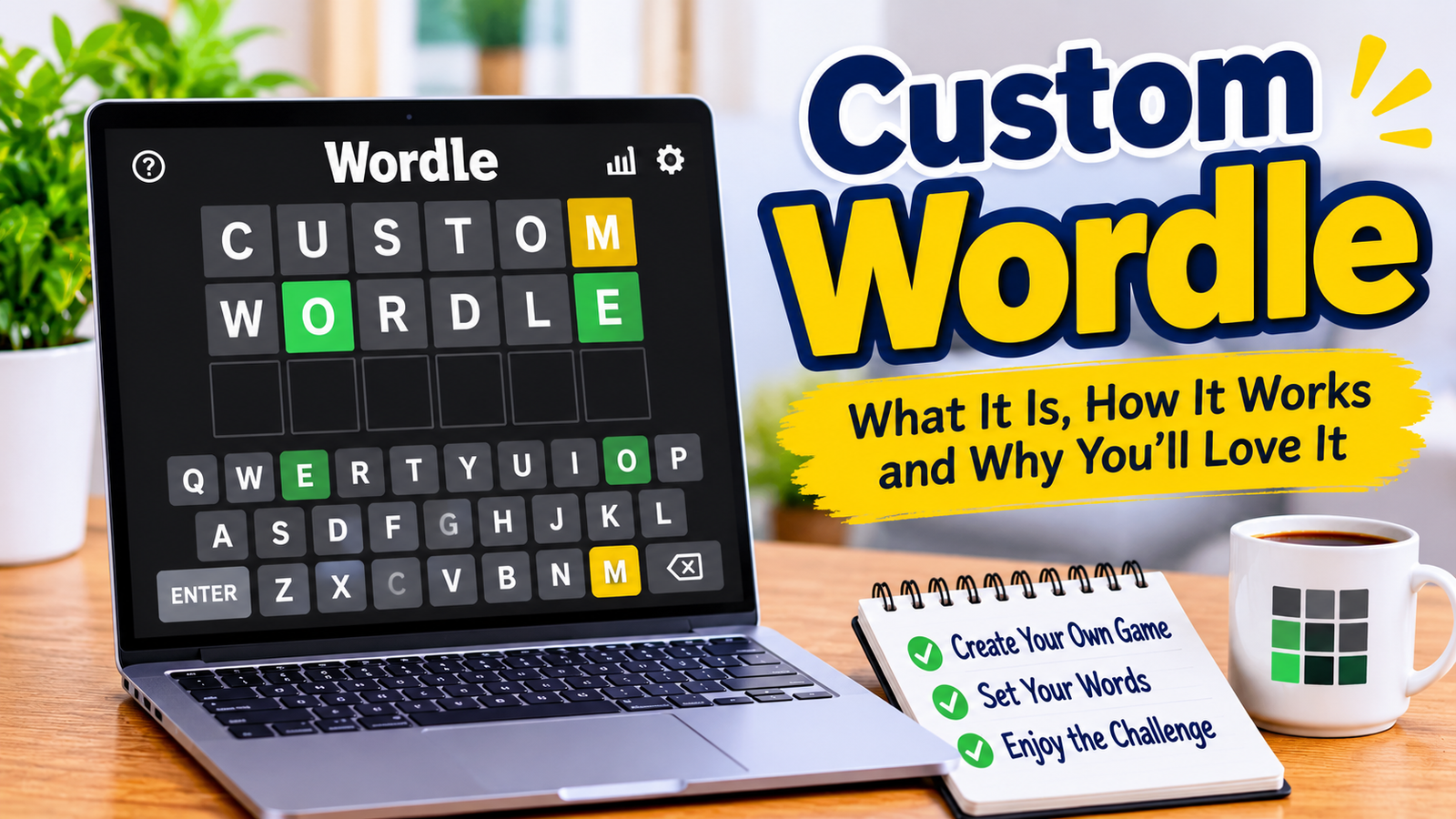
Custom Wordle Word games have always been a great way to challenge the brain, learn new vocabulary, and enjoy some friendly competition. Among the many word puzzles available online, Wordle has become particularly recognizable because of its simple rules and satisfying gameplay. However, while the traditional game offers a daily challenge, many players want something more personal. That’s where Custom Wordle comes in.
Custom Wordle allows players to create their own word-guessing puzzles instead of relying entirely on randomly selected or daily words. You can choose a secret word, challenge your friends, create themed puzzles, or turn an ordinary guessing game into a personalized experience. Whether you’re planning a classroom activity, celebrating someone’s birthday, or simply testing your friends’ vocabulary, customized puzzles offer plenty of creative possibilities.
The best part is that creating a Custom Wordle usually doesn’t require programming skills or complicated software. Several online tools let users enter a word, generate a playable puzzle, and share it through a link. In this guide, we’ll explore how Custom Wordle works, its features, the best ways to create interesting puzzles, and why this simple game can be useful for entertainment, education, and social interaction.
What Is Custom Wordle?
Custom Wordle is a personalized version of the familiar word-guessing game in which players try to discover a hidden word using feedback from their previous guesses. The main difference is that someone can select the answer rather than waiting for the next official daily puzzle. This makes the game more flexible and suitable for different occasions.
In the original Wordle, players typically have six attempts to identify a five-letter word. Each submitted guess produces colored clues showing which letters are correct, which belong elsewhere in the word, and which are absent. Custom Wordle generally follows the same basic structure, although individual puzzle makers may support different word lengths, attempt limits, or additional clues.
One reason Custom Wordle is appealing is the freedom it gives puzzle creators. You can choose a word connected to someone’s interests, a school lesson, or a special event. Instead of solving the same answer as everyone else, players receive a challenge designed for them. That personal touch can make even a simple word puzzle feel more memorable.
How Does Custom Wordle Work?
Custom Wordle works through a process of guessing, receiving feedback, and narrowing down possible answers. When a player opens a puzzle, they see a series of empty tiles representing the letters of the hidden word. They enter a guess of the required length, and the game evaluates it against the secret answer.
The colored tiles provide the information needed to continue. Green generally indicates that a letter is correct and in the right position. Yellow means the letter appears in the answer but belongs somewhere else. Gray indicates that the letter does not occur in the answer, or that an additional occurrence of that letter is not needed when repeated letters are involved. These clues help players develop their next guess.
The game continues until the player identifies the correct word or runs out of attempts. Different custom versions may allow additional guesses, longer words, or optional hints. Despite these variations, the essential experience remains familiar: players use reasoning and vocabulary knowledge to solve a hidden-word puzzle as efficiently as possible.
How to Create Your Own Custom Wordle Puzzle
Creating a Custom Wordle puzzle is usually straightforward, even for someone trying it for the first time. Start by choosing an online Wordle maker that supports personalized words. Websites such as CustomWordle.io and Wordle.design offer custom puzzle creation and sharing features. Each platform has its own settings, so the available options may differ.
After opening the creator, enter the secret word you want others to guess. Some tools allow a wide range of word lengths, while others restrict answers to particular formats or dictionary entries. Choose a word that your intended players can reasonably identify. You may also have the option to add a title, provide a hint, or adjust the puzzle’s difficulty.
Once the puzzle is ready, use the platform’s sharing feature to generate a link. You can send that link through a messaging application, email, or social media. It’s worth testing the puzzle before distributing it, especially when using an unusual word. A quick test helps confirm that the answer is accepted and that the game behaves as expected.
Key Features That Make Custom Wordle Interesting
One of the most valuable features of Custom Wordle is personalized word selection. Standard daily puzzles use predetermined answers, but custom games give the creator control over the challenge. This means a puzzle can feature an appropriate favorite hobby, a school vocabulary term, or a word connected to a shared memory.
Another useful feature is adjustable difficulty. Depending on the platform, creators may choose different word lengths, modify the number of guesses, or provide optional hints. Shorter words may be easier in some situations, but difficulty also depends on letter frequency, familiar spelling patterns, and the number of possible answers. A thoughtfully selected word often creates a better experience than simply choosing the longest available option.
Sharing tools make the experience even more enjoyable. Many Custom Wordle creators generate direct links that players can open without downloading additional software. Some also support result sharing through colored emoji grids, allowing participants to compare their performances without revealing the answer. These features make personalized word puzzles convenient for both individual challenges and group activities.
Custom Wordle vs. Original Wordle: What’s the Difference?
The original Wordle is known for its shared daily challenge. Players generally attempt the same five-letter answer, making it easy to compare results with friends and family. The limited daily format encourages a regular routine and creates a sense of shared participation.
Custom Wordle takes a more flexible approach by allowing individuals to create puzzles around words of their choosing. Many independent platforms support multiple puzzles without waiting for a daily reset. Customization may include word length, hints, and visual themes. That makes these alternatives especially useful for personal events, teaching activities, and informal competitions.
There is also an important update worth knowing: The New York Times introduced an official custom puzzle creation feature for eligible Games or All Access subscribers in 2025. It allows subscribers to create personalized puzzles with words between four and seven letters and share them with others. Independent Custom Wordle websites remain an alternative, particularly for users who want different customization options or access without a subscription.
Why Custom Wordle Is Popular Among Word Game Lovers
The biggest attraction of Custom Wordle is its ability to make word games feel more personal. A traditional puzzle challenges players to identify an unknown answer, while a customized puzzle can include a meaningful connection to the person solving it. For example, a friend might receive a word related to their favorite hobby or an unforgettable shared experience.
Another reason people enjoy custom puzzles is their convenience. Most online creators work directly in a web browser, making them accessible on computers, tablets, and smartphones. Players generally need only a link to begin, although particular platforms may impose their own restrictions. This makes it easy to share challenges with people who have different devices.
Custom Wordle also creates opportunities for social interaction. Friends can challenge one another, families can organize themed puzzle sessions, and colleagues can use word games as lighthearted team activities. Because the rules are relatively easy to understand, people with different levels of gaming experience can participate. That combination of simplicity and personalization gives the format lasting appeal.
How to Choose the Perfect Word for Your Custom Wordle
Choosing the right secret word is one of the most important parts of designing a good Custom Wordle. The answer should be interesting enough to challenge players without making the puzzle feel unfair. Familiar words with recognizable spelling patterns are generally a reasonable starting point, especially when creating a puzzle for beginners.
Consider your audience before choosing the answer. A puzzle for young students should use vocabulary appropriate to their learning level, while a challenge for experienced word-game enthusiasts can include more demanding words. If you’re creating a puzzle for a specific person, choose something they are likely to recognize. Personal references can make the game entertaining, but avoid obscure inside jokes that no one else could reasonably solve.
It’s also worth thinking about the structure of the word. Repeated letters, uncommon combinations, and unusual spelling patterns can increase difficulty. For example, a word such as APPLE contains a repeated letter, which requires players to pay attention to letter quantities. A word such as TRAIN contains several common letters and may offer a more approachable experience. The goal is to create a satisfying challenge, not simply to make players lose.
Best Custom Wordle Ideas for Friends and Family
Custom Wordle can turn ordinary conversations into playful challenges. One fun approach is creating puzzles based on favorite foods, travel destinations, hobbies, or shared interests. Imagine sending a friend a puzzle containing a word connected to a vacation you took together. Solving the answer becomes more than a vocabulary exercise because it also brings back a pleasant memory.
Birthday celebrations are another opportunity for personalized puzzles. Instead of sending only a traditional birthday message, you could create a word puzzle with a meaningful answer. Depending on the creator’s supported vocabulary and word lengths, the answer might relate to a favorite activity, a celebration theme, or a memorable place. Some tools may not accept personal names, so it’s useful to check the platform’s restrictions.
Families can also create friendly guessing competitions during gatherings or holidays. One person can choose a word while everyone else tries to solve the challenge. The group can compare attempts, discuss their reasoning, and take turns creating new puzzles. These simple activities provide entertainment without requiring elaborate equipment or extensive preparation.
Using Custom Wordle in Education and Classrooms
Custom Wordle can be a practical classroom activity because teachers can choose answers connected to current lessons. Instead of presenting vocabulary as an isolated memorization exercise, educators can introduce words through an interactive challenge. Students must think about spelling patterns and use the available clues to work toward a solution.
For example, an English teacher might choose words from a reading assignment, while a science teacher could select appropriate terms connected to a recent topic. The activity becomes particularly useful when followed by a discussion of the answer’s meaning and usage. Solving the puzzle alone does not guarantee vocabulary mastery, but it can encourage curiosity and reinforce familiar concepts.
Teachers should also consider accessibility and student differences. Some learners may need additional hints, more attempts, or alternative ways to participate. Group play can help students share ideas and explain their reasoning. Resources such as Word Puzzles’ custom creator provide options for creating shareable classroom challenges, although individual teachers should review any external platform before using it with students.
Custom Wordle Strategies to Solve Puzzles Faster
A strong starting guess can make a significant difference in Custom Wordle. For puzzles that use the traditional five-letter format, many players begin with a word containing common vowels and consonants. Words such as SLATE, CRANE, or TRACE can reveal useful information about letter placement. However, there is no single opening guess that guarantees success.
After receiving feedback, the next step is to use every clue carefully. Green letters should remain in their confirmed positions, while yellow letters must move to other possible locations. Gray letters can usually be excluded, although repeated-letter situations require more careful interpretation. Rather than guessing randomly, players should eliminate words that conflict with the evidence they already have.
Another useful strategy is thinking about common letter combinations. English words frequently contain recognizable patterns, including combinations such as CH, SH, TH, and ST. Understanding these patterns can narrow down possible answers. However, customized puzzles may include uncommon words or unusual lengths, so players should adapt their approach rather than assuming every puzzle follows the same difficulty level.
Common Mistakes Players Make in Custom Wordle
One common mistake is ignoring information from earlier guesses. Players sometimes focus entirely on the most recent row and forget what previous colors revealed. This can lead to repeated guesses containing letters that have already been ruled out or placing known letters in incorrect positions. Reviewing all available feedback before submitting another answer helps avoid this problem.
Another mistake involves misunderstanding repeated letters. A gray tile does not always mean that the corresponding letter is completely absent when another copy has already been marked green or yellow. For example, a guess containing multiple instances of the same letter may receive different colors depending on how many copies appear in the answer. Understanding this rule prevents unnecessary confusion.
Puzzle creators make mistakes too. Choosing an answer that is excessively obscure, unsupported by the platform, or inappropriate for the intended audience can make the challenge frustrating. Similarly, giving away too much information through a title or hint can remove the enjoyment of solving it. Testing the puzzle and considering the player’s perspective are simple ways to improve the experience.
Can You Play Custom Wordle for Free?
Yes, several independent Custom Wordle websites offer free puzzle creation and gameplay. These platforms typically allow users to enter a secret word, generate a challenge, and send the resulting link to others. For casual players, this can be enough to enjoy customized word games without purchasing additional software.
However, free access depends on the specific service. Some creators provide all their available features without requiring registration, while others may offer optional upgrades or impose usage restrictions. The official New York Times custom puzzle feature has different access conditions: puzzle creation requires an eligible subscription, while recipients can play shared puzzles through the provided link.
Before using any platform, review its current features and policies. A free website may still display advertising or collect information according to its privacy practices. It’s also sensible to avoid entering sensitive personal information as a secret word or puzzle title. Choosing a reputable tool and understanding its sharing behavior can make the experience more comfortable.
Playing Custom Wordle on Mobile Devices
Custom Wordle is well suited to mobile gameplay because word-guessing puzzles generally require only a compact grid and keyboard. Many online creators use responsive layouts that adjust to smartphone screens. This means players can create or solve puzzles while traveling, relaxing at home, or communicating with friends.
The basic gameplay remains similar across devices. Players tap the available letters or use their device’s keyboard, submit guesses, and interpret the colored tiles. Some websites include on-screen keyboards that display previously discovered letter information, which can be especially helpful on smaller screens.
For the best mobile experience, choose a creator that clearly displays the puzzle grid, keeps the keyboard accessible, and makes sharing straightforward. If a puzzle does not display correctly, checking browser compatibility or trying another established platform may help. Since features vary, it is worth testing the creation and playing experience on the device you intend to use.
How to Make Custom Wordle More Challenging
Once you become comfortable with ordinary word puzzles, you may want to increase the difficulty. Choosing less common but recognizable words is one approach. Words with repeated letters or unusual letter arrangements can also encourage more careful reasoning. The challenge should still remain fair, with answers that players have a realistic chance of identifying.
Another possibility is changing the number of available guesses, provided the selected creator supports that option. Fewer attempts make each decision more important, while longer words may require a different strategy. Some independent tools allow creators to configure these settings, but others retain the traditional format. Check the available controls rather than assuming that every Custom Wordle maker offers the same flexibility.
You can also introduce themed challenges. For example, a group of friends might agree that all answers relate to animals, books, or geography. A theme can make guessing easier by narrowing the topic, so choosing more difficult words within that category may help maintain the challenge. The best difficulty setting is one that encourages thoughtful play without making success feel impossible.
Creative Ways to Share Custom Wordle Challenges
Sharing is a major part of what makes Custom Wordle enjoyable. The simplest approach is sending the generated puzzle link through a messaging platform. You can include a short invitation encouraging friends to solve it and share how many attempts they needed. This works particularly well for small groups and casual competitions.
Social media offers another opportunity to introduce creative word challenges. You might share a puzzle link alongside a description of its theme, such as movies, travel, or favorite foods. Avoid revealing the secret word in the accompanying message. If the platform offers spoiler-free results, encourage participants to share those instead of posting the answer directly.
Custom Wordle can also be used in newsletters, community groups, and workplace activities. A weekly themed challenge could give members something lighthearted to discuss. For teams, choosing words connected to a shared project or event may provide an easy conversation starter. The key is to make participation optional, accessible, and enjoyable rather than turning a simple game into an unnecessary obligation.
Is Custom Wordle Good for Brain Training?
Custom Wordle encourages players to use vocabulary knowledge, pattern recognition, attention, and logical reasoning. Each guess provides information that must be evaluated before making another decision. This makes the activity mentally engaging, particularly when players deliberately consider the possible combinations instead of selecting words randomly.
The game can also encourage people to discover unfamiliar vocabulary. Encountering an unusual answer may lead someone to look up its definition, pronunciation, or usage. For language learners, themed puzzles can provide an enjoyable supplement to structured study. However, the usefulness of this approach depends on choosing appropriate words and understanding their meanings afterward.
It’s important not to exaggerate the cognitive benefits. Enjoying word puzzles does not automatically produce broad improvements in intelligence, memory, or long-term brain health. While puzzles can provide mental stimulation and entertainment, scientific claims about preventing cognitive decline require stronger evidence. Custom Wordle is best appreciated as an engaging activity that encourages thinking, learning, and social participation.
The Future of Custom Wordle and Personalized Word Games
Personalization has become an important feature of many digital entertainment experiences, and word puzzles fit naturally into that trend. Custom Wordle demonstrates how a familiar game can offer additional value when users have control over the content. Rather than waiting for a predetermined answer, creators can design challenges that reflect their interests and communities.
Developers may continue experimenting with features such as themed word collections, adjustable difficulty, multilingual support, and more flexible sharing tools. Some existing creators already allow custom word lengths, hints, and titles. These options show how adaptable the original guessing format can be without losing the simplicity that makes it enjoyable.
Whatever features become available, the appeal of Custom Wordle is likely to remain connected to its straightforward gameplay. A good word puzzle does not require complicated graphics or lengthy instructions. It needs a suitable answer, understandable rules, and enough uncertainty to make solving it satisfying. Customization adds a personal dimension to that experience while preserving its familiar foundation.
Conclusion
Custom Wordle takes the familiar excitement of word guessing and gives players the freedom to create their own challenges. Instead of relying only on daily answers, users can choose meaningful words, develop themed puzzles, and share personalized games with friends, family, classmates, or colleagues. Its simple format makes it accessible to beginners while offering enough flexibility to keep experienced players interested.
Creating a successful puzzle involves more than entering a random word. Choosing an appropriate answer, understanding the rules, adjusting difficulty when possible, and testing the challenge can make the experience considerably more enjoyable. Online creators have simplified this process, allowing people to generate and share puzzles without specialized technical knowledge.
Whether you want to improve a classroom vocabulary activity, organize a friendly competition, or send someone a thoughtful challenge, Custom Wordle offers a creative way to bring people together through language. Its combination of accessibility, personalization, and logical thinking makes it an enjoyable addition to the world of online word games.
FUQS
What is Custom Wordle?
Custom Wordle is a personalized word-guessing game that allows users to choose a secret word and create a puzzle for others to solve. It follows the familiar colored-letter feedback system used in Wordle.
How can I make my own Custom Wordle?
Visit a custom puzzle maker, enter your chosen word, adjust any available settings, and generate a shareable link. You can then send the puzzle to friends or family.
Is Custom Wordle free to play?
Several independent Custom Wordle platforms offer free creation and gameplay. The official New York Times creation feature requires an eligible subscription, although shared puzzles can be played by recipients without one.
Can I create a Custom Wordle with more than five letters?
Yes, some Custom Wordle makers support longer and shorter answers. The supported word lengths depend on the particular platform you choose.
Can Custom Wordle be used in schools?
Yes, teachers can use customized puzzles for vocabulary practice, spelling activities, and themed lesson reviews. Choosing age-appropriate words and providing follow-up explanations can make the activity more educational.
Also Read: Antarvafna