Crunchbase: The Complete Guide to Company Research, Startup Funding, Investors, and Business Growth

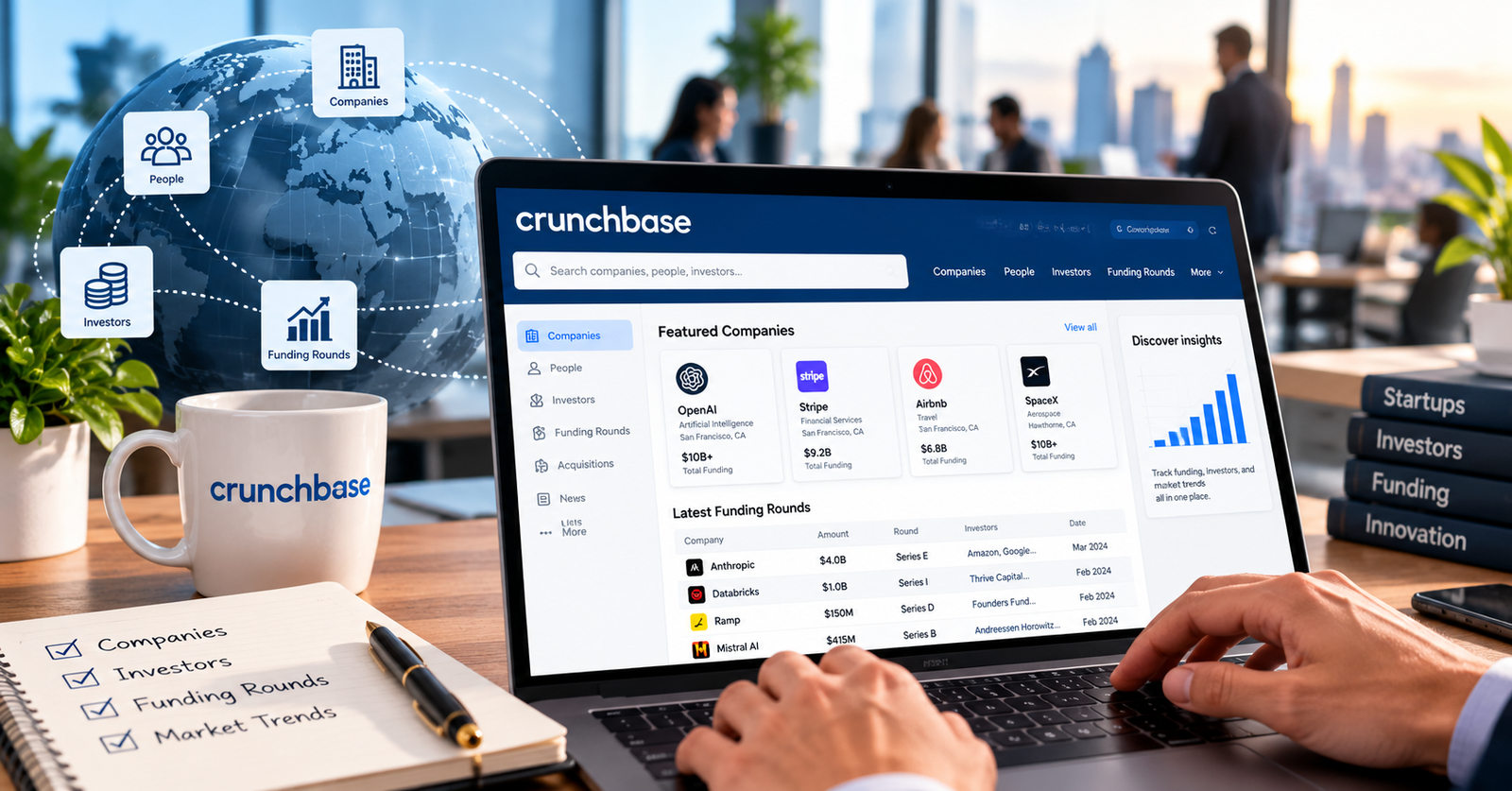
In Crunchbase competitive business environment, having access to reliable company information can make a real difference. Whether you’re an entrepreneur searching for investors, a sales professional looking for potential clients, or someone curious about the startup industry, finding accurate business data is essential. That’s where Crunchbase comes into the picture. It has become a recognized platform for researching companies, exploring investment activity, and understanding developments across the global startup ecosystem.
The business world moves quickly. New startups launch, companies raise millions of dollars, investors discover promising opportunities, and industries experience unexpected changes. Keeping track of everything manually can be exhausting. Crunchbase simplifies this process by bringing company profiles, funding information, investor activity, and market intelligence into one searchable platform. Instead of spending hours gathering information from different websites, users can begin their research in one place.
What makes the platform especially interesting is that it serves more than one type of audience. Startup founders can investigate potential investors, sales teams can discover promising leads, researchers can analyze market trends, and business professionals can monitor competitors. This guide explores what Crunchbase is, how it works, its main features, subscription options, advantages, limitations, and why it has become an important resource for people navigating the modern business landscape.
What Is Crunchbase?
Crunchbase is an online business intelligence platform that provides information about private and public companies, investors, funding rounds, acquisitions, and other business activities. It is particularly well known for its coverage of startups and privately held companies. The platform allows users to search business profiles and examine information that helps them understand a company’s background, financial milestones, and development.
Unlike an ordinary business directory that primarily displays contact information, Crunchbase provides deeper insights into company activity. Depending on the available data and subscription level, a profile may include founding details, industry classifications, funding history, investors, leadership information, and important business events. These details can help users build a more complete picture of an organization before making professional decisions.
The platform has also expanded beyond traditional company research. Today, it emphasizes predictive intelligence, using business signals and analytical models to identify possible future developments such as fundraising, acquisitions, growth, and public offerings. These predictions are designed to support decision-making, although they should be understood as estimates rather than guarantees.
The History and Background of Crunchbase
Crunchbase began in 2007 as a project connected to TechCrunch, the technology news publication. Its original purpose was to organize information about startups and companies mentioned in technology reporting. At the time, the startup ecosystem was growing rapidly, but information about private businesses was often scattered across news articles, press releases, and company websites.
As more people became interested in entrepreneurship and venture capital, the database attracted attention beyond its original audience. Investors wanted to investigate emerging companies, founders needed information about potential funding partners, and researchers were looking for a way to monitor startup activity. The platform gradually developed into a more comprehensive source of business information, rather than remaining a supporting resource for technology journalism.
A significant milestone arrived in 2015 when Crunchbase separated from AOL and became an independent venture-backed company. Emergence Capital led its initial financing as a standalone business. This transition helped establish Crunchbase as an independent organization focused on company intelligence, data products, and commercial research tools.
How Does Crunchbase Work?
Crunchbase works by gathering, organizing, and presenting business information in searchable company and investor profiles. Users can visit the platform, search for a business, and examine the information associated with that organization. Depending on their access level, they can also use filters to narrow results by industry, location, funding stage, company characteristics, and other criteria.
Behind the scenes, the platform combines multiple sources of information. According to Crunchbase’s documentation, these include venture capital partners, community contributors, third-party data relationships, automated validation systems, and internal data specialists. The company also uses artificial intelligence and analytical systems to organize information and identify meaningful patterns in business activity.
For users, the process is relatively straightforward. Imagine someone researching artificial intelligence startups in Europe. Rather than searching individual company websites, they can use relevant filters to discover organizations matching their interests. From there, they can investigate funding histories, business descriptions, and available investor information. This approach makes it easier to move from a broad research question toward a focused list of potential opportunities.
Key Features of Crunchbase
One of the most useful features of Crunchbase is its company profile database. These profiles provide a central place to research business information, including company descriptions, industry classifications, financing activity, and important milestones. The level of detail varies between organizations, but the platform is designed to make company research more organized and efficient.
Another important feature is advanced search and filtering. Instead of browsing businesses one at a time, users can build searches around specific criteria. For example, a sales professional may want to identify software companies operating in a particular country, while an investor may be interested in early-stage businesses within a specialized industry. Search filters help turn these broad interests into manageable research results.
Crunchbase also offers company activity alerts, market insights, predictive intelligence, and integrations for business workflows. Paid subscriptions provide different levels of access to these capabilities. Its newer tools include AI-assisted research and predictive models that examine the likelihood of certain business events, such as future funding rounds or company growth.
Crunchbase for Startup Research
Startups are one of the main reasons people visit Crunchbase. Launching a business involves understanding the market, identifying competitors, researching investors, and recognizing emerging opportunities. The platform brings together information that can help founders investigate these areas before making important strategic decisions.
For example, an entrepreneur planning to launch a financial technology company might begin by researching existing businesses in the same sector. By examining funding histories, company descriptions, and known investors, the founder can develop a clearer picture of the competitive environment. This does not replace a full market study, but it can provide valuable background information during the early stages of planning.
Startup research also involves recognizing patterns. Some industries attract considerable investment, while others experience slower funding activity. Some companies grow rapidly after securing financing, while others remain relatively small. Crunchbase can help users observe these developments across different organizations. However, founders should remember that a company’s funding history does not necessarily reveal its profitability, customer satisfaction, or long-term sustainability.
How Crunchbase Helps Entrepreneurs Find Investors
Finding suitable investors is one of the biggest challenges facing startup founders. Many entrepreneurs spend considerable time preparing presentations and approaching potential funding partners, only to discover that those investors do not specialize in their industry or business stage. Researching investment preferences before making contact can significantly improve the quality of outreach.
Crunchbase helps founders explore investor profiles and examine previous financing activity. A startup operating in healthcare technology, for instance, may want to investigate investment firms that have previously supported businesses in the same sector. Information about investment histories and portfolio companies can help entrepreneurs identify investors whose interests appear relevant to their business.
Of course, appearing in an investor’s portfolio history does not mean that the firm is currently accepting proposals or interested in another company within the same category. Funding decisions depend on numerous factors, including market conditions, business performance, investment strategy, and available capital. Entrepreneurs should use Crunchbase as a research resource, then verify current investment criteria through official investor websites and direct professional communication.
Understanding Startup Funding Data on Crunchbase
Startup funding information is one of the platform’s most recognizable features. Company profiles can show financing rounds, investment amounts, participating investors, and relevant dates when that information is available. These details help users understand how businesses have financed their operations and how their fundraising activity has developed over time.
For readers unfamiliar with startup finance, funding rounds commonly include pre-seed, seed, Series A, Series B, and later-stage investment. These labels generally describe different stages of a company’s financing journey, although their meaning can vary considerably between businesses. A seed round may support early product development, while later funding may help a company expand its operations, recruit employees, or enter additional markets.
However, a large funding amount should not automatically be interpreted as proof of success. Investment activity can indicate investor interest, but it does not establish that a business is profitable or financially secure. Funding figures may also exclude undisclosed transactions or reflect information that has not yet been updated. For serious financial analysis, users should compare Crunchbase records with company announcements, regulatory filings, and other appropriate sources.
Crunchbase for Sales and Lead Generation
Sales teams need to identify businesses that are likely to benefit from their products or services. Traditional prospecting often involves searching through company websites, building contact lists, and manually researching each potential customer. This process can consume considerable time, particularly when a business targets a specialized market.
Crunchbase supports prospecting by allowing users to search for companies using business characteristics and available growth signals. For example, a company offering recruitment software might research organizations that have recently raised capital or appear to be expanding. Similarly, a cybersecurity provider could look for growing technology businesses that may need additional security infrastructure.
The platform can also fit into existing sales workflows. Crunchbase Business supports integrations with systems such as Salesforce, HubSpot, and Zapier, while certain packages offer CRM enrichment capabilities. These tools can help teams maintain business information and organize prospecting activities more effectively. Access depends on the subscription and configuration, and users must still follow applicable privacy laws and responsible outreach practices.
Using Crunchbase for Competitor Analysis
Competitor research is an important part of building and maintaining a successful business. Understanding what other organizations are doing can reveal emerging market trends, potential threats, and opportunities for improvement. Crunchbase can support this research by providing structured information about companies operating within similar industries.
Suppose a software business wants to understand how competing companies are expanding. It could examine available funding records, acquisition activity, company descriptions, and industry classifications. These details may help identify organizations that are attracting financial support or entering new areas of the market. Users can also compare different companies to develop a broader understanding of industry activity.
Still, competitor analysis requires more than financial and company-profile data. Customer reviews, product demonstrations, pricing information, public financial reports, and direct market research may reveal important details that are not available through Crunchbase. The most effective strategy is to combine structured company intelligence with other reliable sources rather than treating one database as a complete picture of every competitor.
Crunchbase Pricing and Subscription Plans
Crunchbase offers different subscription options for users with different research and business requirements. Its current product categories include Free, Pro, Business, and API access. The free option is intended for people who need basic company information, while paid subscriptions support more advanced research, prospecting, collaboration, and data integration.
Crunchbase Pro is designed primarily for individuals who need deeper company intelligence and research tools. According to its October 2026 support documentation, Pro includes advanced searching, company insights, activity tracking, and predictive features. An introductory annual subscription offer was listed at $588 for the first year, alongside a seven-day trial. Because promotional pricing can change, users should confirm the latest charges and renewal terms directly on the official website.
Crunchbase Business targets organizations that need additional collaboration and workflow capabilities, including supported CRM integrations and expanded access. API products allow companies to incorporate licensed data into their own applications and systems. Pricing for these services may involve sales discussions rather than a simple publicly listed fee. Before choosing a plan, it is worth comparing access limits, export allowances, integration requirements, and how frequently the information will actually be used.
Is Crunchbase Free to Use?
Yes, Crunchbase provides a free access option, although its capabilities are more limited than those of paid subscriptions. Free access is suitable for people who occasionally need basic information about companies or want to explore the platform before committing to a subscription.
According to the current plan comparison, free users can create or edit profiles, access basic company information, and use selected platform features with restrictions. Search results and advanced research tools are limited compared with paid access. This means the free version can be useful for casual research but may not meet the needs of someone conducting large-scale market analysis or regular sales prospecting.
For example, a student researching a small number of startups might find the free account adequate for initial exploration. A professional who needs to analyze hundreds of companies or regularly export data would likely encounter limitations. The right choice depends on the user’s research goals, budget, and need for advanced features rather than on the assumption that a paid account is necessary for everyone.
The Role of Artificial Intelligence in Crunchbase
Artificial intelligence has become a significant part of the modern Crunchbase platform. Rather than simply displaying records of past business events, the company now uses predictive models to analyze patterns and estimate possible future developments. Its prediction categories include funding activity, company growth, acquisitions, initial public offerings, closures, and other business outcomes.
The technology examines different forms of business data and signals to identify patterns that may indicate changes in a company’s trajectory. These signals can include financing history, company activity, market developments, and other information available within its datasets. Crunchbase also provides AI-powered insights intended to make company research easier by summarizing important developments and highlighting relevant context.
However, predictive intelligence has limitations. A forecast that a startup may raise another funding round does not mean an investment has been secured. Economic conditions, management decisions, competition, and unexpected events can all change a company’s future. AI-generated company descriptions and analytical insights should also be checked when accuracy is critical. The best use of these tools is to support professional judgment, not replace it.
Crunchbase API and Business Data Integration
The Crunchbase API is particularly relevant to developers, data analysts, and businesses that want to incorporate company intelligence into their own systems. Instead of manually researching organizations through a browser, authorized users can request data programmatically and use it within internal applications, analytics tools, or approved business workflows.
For instance, a company developing a market research dashboard may want to organize business information by industry, funding stage, or location. With an appropriate API subscription, developers can retrieve supported records and use them to build searchable interfaces, automate certain research processes, or enrich existing datasets. The available fields and capabilities depend on the licensed product.
API integration also introduces technical and compliance responsibilities. Developers must handle authentication, usage limits, data updates, and any contractual restrictions associated with the service. Crunchbase provides technical documentation covering API access, searches, company lookups, predictions, and integration practices. Organizations planning substantial data operations should review these requirements carefully before building production systems.
How Accurate and Reliable Is Crunchbase?
Accuracy is one of the most important considerations when using any business information platform. Crunchbase maintains a structured data collection process involving venture capital firms, contributors, automated systems, and human review. According to its own documentation, thousands of venture partners participate in its data network, while executives, entrepreneurs, and investors contribute updates to company profiles.
These processes provide useful foundations for maintaining a large business database. However, the quality of individual records may still vary. Private companies are not always required to disclose detailed financial information, and some funding transactions remain confidential. Information about employee counts, revenue ranges, leadership changes, or financing activity may therefore be incomplete or subject to revision.
For everyday research, the platform can serve as a useful starting point. For investment decisions, legal investigations, acquisition planning, or formal financial reporting, additional verification is essential. Important figures should be compared with official corporate disclosures, reliable financial records, and other authoritative evidence. No single commercial database can guarantee perfect coverage of the entire private business market.
Advantages of Using Crunchbase
One of the biggest advantages of Crunchbase is convenience. Business research traditionally requires users to gather information from company websites, press releases, investment announcements, and news publications. Having a searchable collection of company records reduces the effort involved in discovering relevant businesses and organizing initial research.
Another advantage is the platform’s usefulness across different professional activities. Entrepreneurs can examine investor histories, sales professionals can identify potential customers, and analysts can investigate market developments. This flexibility means that an individual or organization can use the same platform for several related tasks rather than relying entirely on separate research services.
Its predictive capabilities and business integrations add further value for users who need more than basic company profiles. Company alerts, analytical insights, and selected CRM tools can support ongoing workflows. Nevertheless, these advantages are most meaningful when the platform’s data coverage aligns with the user’s target market and its subscription costs make sense for the expected benefits.
Limitations and Disadvantages of Crunchbase
Despite its strengths, Crunchbase has several limitations that users should understand. The first is that private company information is inherently difficult to maintain with complete accuracy. Not every startup publishes its financial results, announces all its funding details, or updates its public profile regularly. As a result, certain company records may contain missing or outdated information.
Another limitation involves subscription restrictions. Although basic access is available, many advanced features require payment. Individuals who need extensive exports, predictive intelligence, or organizational integrations may need to purchase a higher-level product. For students, independent researchers, and very small businesses, the cost may be difficult to justify unless the platform is used frequently.
A third limitation is that structured data cannot explain every aspect of business performance. A startup might attract significant investment while struggling with operational problems, or an established company may perform well without regularly appearing in financing news. Users should avoid drawing strong conclusions from individual metrics and remember that company research requires context, critical thinking, and supporting evidence.
Crunchbase vs. Other Business Intelligence Platforms
Crunchbase is not the only platform offering company and market information. Services such as PitchBook, CB Insights, and Tracxn also provide tools for researching businesses, investment activity, and market developments. However, each serves somewhat different audiences and professional needs.
Crunchbase is widely associated with startup discovery, company profiles, funding histories, and prospecting. PitchBook places substantial emphasis on private capital markets and financial research. CB Insights focuses heavily on technology markets and strategic intelligence, while Tracxn provides startup and private company tracking across numerous sectors. The depth, coverage, and available functionality of these services differ.
Choosing between platforms should depend on the task rather than brand recognition alone. An investor conducting complex transaction analysis may prioritize different features from a sales professional building a prospect list. Before subscribing, users should compare data coverage, geographic relevance, search tools, financial details, export restrictions, customer support, and overall pricing. Testing a representative sample of companies can reveal which service provides the most useful information for a particular workflow.
How to Create and Manage a Company Profile on Crunchbase
A company profile can help present basic organizational information in a structured business database. Founders and authorized representatives may wish to review their company’s existing record or contribute information where the platform allows it. This can help make accurate descriptions, industry classifications, and relevant business details available to people conducting research.
The process generally begins by creating an account and searching for the organization’s name. If a relevant profile exists, users can investigate whether corrections or updates are needed. If no suitable profile appears, they can review the current contribution process and eligibility requirements. Crunchbase’s plan documentation confirms that creating and editing profiles remains available within its supported account offerings, subject to platform rules.
When updating a profile, accuracy matters more than promotional language. Company descriptions should explain what the organization actually does, while financial claims and other factual information should be supported where required. A listing should not be treated as a guaranteed marketing channel or an endorsement from the platform. Its primary value lies in giving researchers access to structured, verifiable information.
Why Crunchbase Matters in the Modern Business World
The modern business environment generates enormous amounts of information. Startup launches, funding announcements, acquisitions, and leadership changes occur across different countries and industries every day. Turning this activity into meaningful insight can be difficult without organized data and appropriate research tools.
Crunchbase matters because it helps connect individual business events to a wider market context. A funding announcement becomes more useful when researchers can examine the participating investors and the company’s previous financing history. A company profile becomes more informative when it can be considered alongside industry trends, competing organizations, and changes in market activity.
For business professionals, this broader perspective can improve the preparation behind strategic decisions. It may help an entrepreneur understand an industry before launching a product, assist a sales team in prioritizing prospects, or give an analyst a starting point for identifying emerging companies. The platform cannot eliminate uncertainty, but it can make certain parts of the research process more systematic.
The Future of Crunchbase and Startup Intelligence
Business intelligence is evolving as artificial intelligence, automation, and data integration become more sophisticated. Traditional databases primarily answered questions about what had already happened. Newer systems increasingly attempt to identify patterns that may indicate what could happen next. Crunchbase’s emphasis on predictive company intelligence reflects this broader direction.
Its product development has also moved toward integration with AI-assisted workflows and external business systems. In 2026, Crunchbase documented enhancements related to company coverage, market insights, predictive data, and tools for connecting its information with AI applications. These developments suggest an ongoing focus on making private-market information useful beyond the company’s own website.
The long-term challenge will be balancing advanced technology with reliable underlying data. Predictive models become less useful when their inputs are incomplete, outdated, or misunderstood. The platforms that provide lasting value will likely be those that combine extensive coverage, transparent methodology, careful validation, and practical tools. For Crunchbase, continued attention to data quality and user trust will be just as important as introducing new features.
Conclusion
Crunchbase has developed from a startup information project into a business intelligence platform used for company research, funding analysis, investor discovery, sales prospecting, and market intelligence. Its searchable profiles and structured business information make it a useful resource for professionals who need to understand companies and developments within the startup ecosystem.
The platform offers different levels of access, from limited free research to advanced subscriptions and API products. Its combination of company records, funding information, business signals, and predictive capabilities can support a wide variety of research activities. However, subscription limits, incomplete private-market information, and the uncertainty of forecasts mean that users should evaluate its findings carefully.
Ultimately, Crunchbase is most valuable when used as a research tool rather than an unquestionable source of truth. Entrepreneurs, investors, analysts, and sales professionals can benefit from its ability to organize business information, but important decisions still require additional evidence and professional judgment. By combining structured company intelligence with independent verification, users can make better-informed decisions and understand the increasingly complex business landscape.
Also Read: ThomsonKids.com