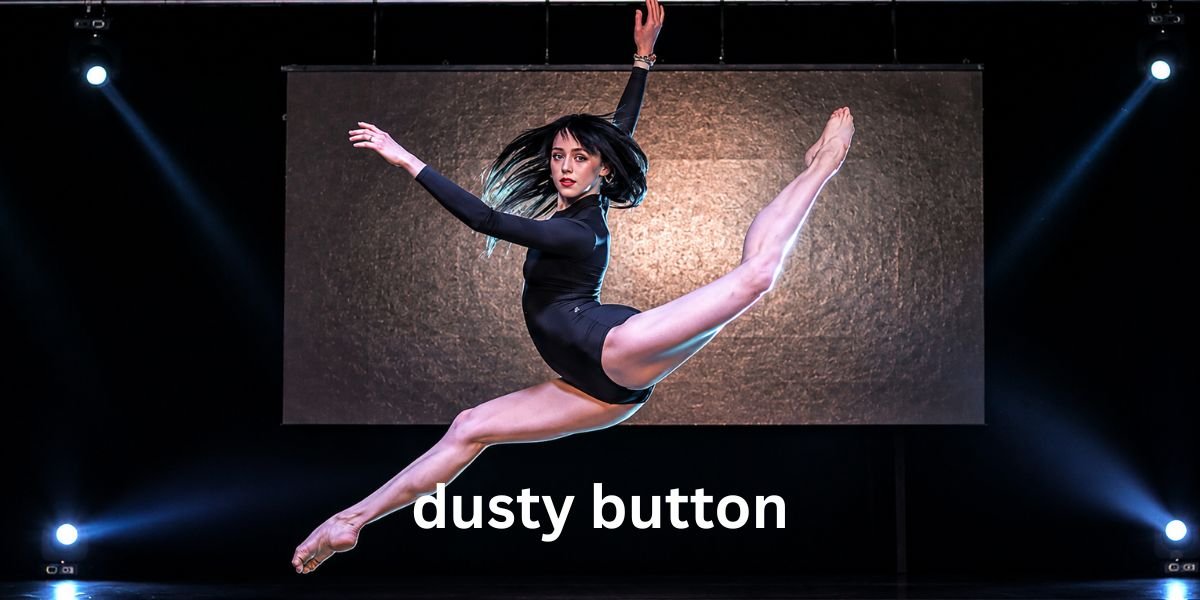
Who Is Dusty Button?
Dusty Button is the name of a person who managed to attract the attention of the ballet community due to his artistic success and controversies. The artist is known for her technical mastery, modern image and fast promotion to the role of principal dancer at Boston Ballet, which made her noticeable in the ballet scene. Her artistic career was characterized by top-class education, performing abroad, choreography work, and an active use of social media as means of distinguishing herself from classical ballerinas. However, later, legal claims were able to alter the perception of her image. This article will tell about Dusty Button’s background, career, impact, artistic style and controversies.
Born on June 6, 1989, in Myrtle Beach, South Carolina, Dusty Button began dancing at a young age. Rather than focusing exclusively on ballet from the beginning, she reportedly studied several dance styles, including jazz, tap, and hip-hop. This broader movement background may have contributed to the confidence and versatility that later became visible in her professional performances.
The name Dusty Button is now connected to two very different parts of public discussion. Dance audiences may remember her as a fast-rising Boston Ballet principal and a highly marketable performer, while others know her because of serious allegations made in a federal civil lawsuit. Understanding her public story therefore requires a balanced look at her training, achievements, artistic reputation, and the legal controversy that followed.
Dusty Button’s Early Life and Ballet Training

Dusty Button began formal dance training when she was approximately seven years old. Like many professional dancers, she spent much of her childhood developing coordination, flexibility, musical awareness, and stage confidence. Her early participation in different dance genres gave her exposure to movement styles that were less restrained than traditional ballet, something that later appeared to influence her public persona.
As her interest in classical ballet became more serious, Button attended the Jacqueline Kennedy Onassis School at American Ballet Theatre in New York. The school is associated with one of the most recognised ballet organisations in the United States and provides demanding technical preparation for dancers pursuing professional careers. Training at that level requires far more than natural flexibility or performance energy; dancers must develop precise alignment, controlled turns, strong pointe work, and the stamina required for full-length productions.
Button later continued her education at the Royal Ballet School in London and reportedly graduated with honours. In 2006, she received a bronze award at the Youth America Grand Prix, an international ballet competition that has helped many young dancers gain professional exposure. Her official Youth America Grand Prix biography also credits her with training at both the Jacqueline Kennedy Onassis School and the Royal Ballet School.
The Beginning of Dusty Button’s Professional Career
After completing advanced ballet training, Dusty Button joined Birmingham Royal Ballet in 2008. Entering a major professional company is a demanding transition because a dancer must quickly adapt from school-based coaching to full production schedules. Professional ballet involves long rehearsals, repeated performances, physical fatigue, competition for roles, and the constant expectation of technical consistency.
Her time in the United Kingdom provided experience within the British ballet system, which is known for disciplined classical technique and detailed dramatic performance. Button was also credited with choreographing work for Birmingham Royal Ballet, suggesting that she had interests beyond simply performing assigned roles. Choreography requires a different understanding of movement because the artist must consider musical structure, spacing, visual composition, and the abilities of an entire cast.
Button was later invited to join Boston Ballet in 2012. According to professional dance profiles, she entered the company’s corps de ballet and advanced to soloist before being promoted to principal dancer in 2014. Reaching principal status within roughly two years was a particularly fast rise and demonstrated the confidence Boston Ballet’s leadership placed in her abilities at that time.
Dusty Button’s Rise at Boston Ballet
A principal dancer usually performs the most prominent roles in a ballet company. These roles often require advanced technique, reliable partnering, emotional range, and the physical endurance to carry a major production. Dusty Button performed both classical and contemporary material, which allowed her to present herself as more than a dancer suited to one specific style.
Her repertoire was associated with demanding productions and leading characters, including the dual role of Odette and Odile in Swan Lake. That particular assignment is considered challenging because the dancer must present two sharply different personalities while maintaining difficult technical standards. Dance publications also described Button as comfortable in fast contemporary choreography, showing that she could move between traditional ballet vocabulary and more experimental movement.
Button’s employment with Boston Ballet ended on May 22, 2017, according to a statement later published by the organisation. The publicly available statement confirmed the date but should not be used to speculate about circumstances beyond what the company officially disclosed. Her period with Boston Ballet nevertheless remains the most widely recognised stage of her performing career.
Artistic Style and Public Image
Dusty Button developed an artistic identity that differed from the quiet, highly controlled image traditionally associated with classical ballerinas. She presented herself as energetic, athletic, direct, and interested in subjects outside dance. Interviews and profiles frequently discussed her interest in cars, fashion, choreography, and entrepreneurship alongside her ballet career.
This image helped her connect with younger dancers through social media. Instead of showing only polished stage photographs, Button shared training clips, lifestyle material, fashion-related content, and glimpses of her personality. At a time when professional dancers were becoming more active on visual platforms, her online presence made ballet feel more accessible and contemporary to some audiences.
Her approach also reflected a wider change in the dance industry. Professional dancers were no longer dependent entirely on company websites, printed magazines, or official production programmes to build public recognition. Social platforms allowed performers to develop individual brands, communicate directly with followers, and attract opportunities outside their home companies. Button became a noticeable example of that shift during the peak of her Boston Ballet career.
Technique, Versatility, and Choreographic Work
From a technical perspective, Button became known for powerful turns, long lines, flexibility, and an athletic quality of movement. Those features translated well into short videos and promotional photography, helping her work gain attention beyond audiences who regularly attended ballet performances. Her ability to create visually striking positions was particularly suited to digital media.
However, ballet technique involves more than dramatic extensions or multiple turns. A professional dancer must maintain clean placement, musical timing, controlled transitions, and an awareness of the other performers onstage. Button’s promotion to principal dancer indicated that she had demonstrated sufficient technical and performance ability to take on leading responsibilities within a major American company.
Her official professional biography has also credited her with choreographic work for organisations in cities including Boston, Los Angeles, New York, and San Francisco. It additionally lists guest-performance connections with companies and institutions such as American Ballet Theatre, K-Ballet, Ballet Hawaii, and Alvin Ailey Dance Theater. These credits show that her professional activity was not limited to one company or one type of stage work.
Dusty Button’s Influence on Young Dancers
At the height of her visibility, Dusty Button appealed strongly to young dancers who wanted to see a less conventional version of professional ballet. Her image suggested that a ballerina could be technically serious while still having interests in fashion, cars, popular culture, and business. This was attractive to students who admired ballet but did not necessarily identify with its traditional public image.
Button also participated in workshops, conventions, master classes, and guest appearances. These environments allow young dancers to learn combinations, observe professional movement quality, and receive corrections outside their regular studios. A famous guest teacher can also bring significant commercial attention to a dance event, especially when that person already has a large online audience.
It is important, however, to separate public branding from verified teaching quality or personal conduct. Social-media popularity can demonstrate reach, but it does not automatically prove that a person is a responsible educator, mentor, or authority. The later legal allegations involving Button and her husband significantly changed how many people within the dance community viewed her influence and access to younger dancers.
Legal Controversy Involving Dusty Button
In 2021, Dusty Button and her husband, Mitchell Taylor Button, became the subjects of serious allegations in a federal civil lawsuit filed in Nevada. The amended complaint alleged that the couple used their influence within the dance community to manipulate and sexually abuse young dancers. Dusty Button was added as a defendant when the original complaint was expanded in September 2021.
These claims are allegations made by plaintiffs in civil litigation. They should not be described as proven criminal convictions or final judicial findings. The Buttons have disputed the allegations and have pursued additional lawsuits against lawyers, journalists, former dancers, and other individuals connected to reporting or discussion of the Nevada case.
The original Nevada litigation remained active in 2026, with its public docket showing updates as recently as July 6, 2026. Because the case has involved extensive motions, discovery disputes, sealing requests, and related proceedings, any description of its status should be dated carefully. A pending or actively litigated civil case can change through settlement, dismissal, trial, appeal, or additional judicial orders.
The Buttons have also filed several separate lawsuits challenging statements and publications connected to the allegations. In September 2025, a federal court dismissed their claims against The New York Times and several other defendants. The court described that action as one of multiple cases brought by the Buttons in connection with the Nevada litigation and the reporting surrounding it.
In January 2026, another federal court dismissed with prejudice a lawsuit brought by the Buttons against an individual who had posted about the allegations on Instagram. The court concluded that the post accurately described allegations contained in the underlying lawsuit and was protected under the applicable legal framework. That ruling concerned the later defamation-related case; it did not itself determine the truth of every allegation in the original Nevada lawsuit.
The Importance of Careful Language When Discussing the Case
Public articles about Dusty Button must distinguish clearly between documented career facts, allegations, denials, procedural rulings, and final findings. Saying that a lawsuit “alleges” misconduct is legally and factually different from stating that the accused person committed that misconduct. Responsible reporting preserves that distinction unless a court has issued a relevant final judgment.
It is equally important not to erase the seriousness of the claims simply because they remain allegations. The lawsuit involves multiple plaintiffs and descriptions of alleged exploitation within professional dance environments. Discussions about the case have contributed to broader conversations about power imbalances, safeguarding, teacher-student boundaries, and the vulnerability of young performers seeking professional opportunities.
The dance world often depends on close mentoring relationships, private coaching, travel, workshops, and intense personal trust. Those conditions can support artistic development, but they can also create opportunities for inappropriate control when safeguarding systems are weak. Whatever the eventual legal outcome, the controversy demonstrates why studios and professional organisations need clear reporting procedures, background checks, supervision policies, and enforceable boundaries.
Why Dusty Button Remains a Discussed Figure
Dusty Button remains a frequently searched name because her public story combines artistic achievement with an unresolved and highly serious legal controversy. Her rapid promotion at Boston Ballet, modern image, and strong social-media presence made her recognisable well beyond traditional ballet audiences. That visibility also meant that the allegations attracted significant attention when they became public.
For dance historians and audiences, her career illustrates how quickly a performer can build an individual brand in the digital era. Technical skill, visual presentation, media confidence, and online engagement helped Button create a profile that was not entirely dependent on her company position. Many dancers now follow a similar model, although the risks of public exposure have also become more obvious.
For studio owners, teachers, and parents, the controversy raises different questions. It highlights the need to examine who receives access to young dancers, how mentoring relationships are supervised, and whether reputation is being mistaken for trustworthiness. Fame within a specialist industry should never replace proper safeguarding or professional accountability.
Final Thoughts on Dusty Button
The case of Dusty Button is an example of success and complexity associated with being a public figure in professional dancing. Indeed, her successful career from being well-trained in ballet to becoming principal dancer at Boston Ballet proves her professionalism, dedication, talent, and stage performance. Moreover, she has contributed to presenting ballet in a new light by utilizing contemporary marketing tools and social media. However, the severe accusations of legal nature that followed Dusty Button’s name have considerably influenced her public image. As the above-mentioned issues are delicate from the legal perspective, it is important to talk about them responsibly.
Her public reputation changed dramatically after she was named in a federal civil lawsuit containing serious allegations. Those claims have been denied and should continue to be described accurately as allegations unless a court establishes otherwise. Related legal actions and procedural rulings have added further complexity to an already sensitive public story.
Also Read: Nadeshda Ponce