Misia Butler: The Rising British Actor Making Waves Through KAOS, Netflix Roles, and Authentic Representation

Who Is Misia Butler?
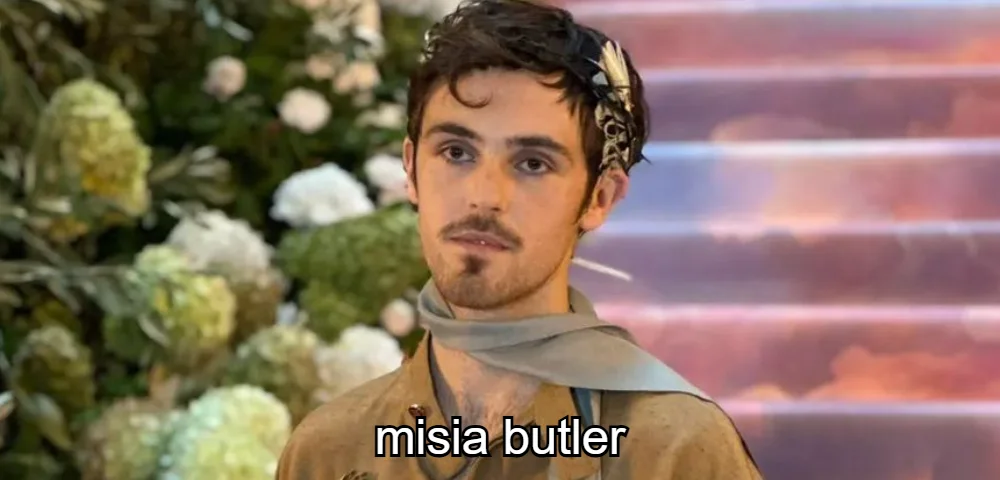
Misia Butler is a British actor who has been gaining attention for his screen work, especially after appearing as Caeneus in Netflix’s mythological series KAOS. While he is not the kind of celebrity who constantly lives in headlines, his career has quietly built momentum through smart role choices, meaningful performances, and projects that speak to modern audiences. His name is now closely connected with thoughtful representation, especially because of the way KAOS brought a transmasculine mythological character into a major streaming series.
What makes Misia Butler interesting is that his rise does not feel forced or manufactured. He has worked across British television, Netflix fantasy drama, and film, taking roles that show range rather than chasing pure celebrity visibility. Viewers may recognize him from The School for Good and Evil, Kiss Me First, The Bastard Son & The Devil Himself, and, most notably, KAOS.
At the same time, Butler represents a newer kind of screen presence: someone whose identity, craft, and public voice all matter without one reducing the other. He is known as an actor first, but his visibility as a transgender man has also made his work meaningful for audiences who rarely see transmasculine characters placed at the center of romance, mythology, and heroism.
Early Life, Training, and First Steps Into Acting
Misia Butler was born and raised in London, England, and developed an interest in acting at a young age. Public information about his private family life is limited, which is worth noting because not every rising actor shares personal details publicly. In Butler’s case, the better-documented part of his story begins with his training and early acting opportunities rather than family background or childhood specifics.
One important step in his early acting journey came through a short acting course run by the charity Gendered Intelligence in collaboration with the Central School of Speech and Drama. Butler has spoken about that course as a major entry point into the industry. It connected him with training, auditions, and industry exposure at a stage when he was still discovering what a professional acting path could look like.
That training helped lead to his first screen role in Casualty, the long-running BBC medical drama. According to public career summaries and interviews, Butler appeared in the show as a teenager, and the experience helped him move forward professionally. For many actors, that first credited role becomes the moment where acting stops being just a dream and starts becoming a real career path. For Butler, Casualty seems to have served exactly that purpose.
Misia Butler Career Before KAOS
Before KAOS introduced him to a wider global audience, Misia Butler had already built a solid list of screen credits. In 2018, he appeared in Kiss Me First, a British psychological thriller series that blended live-action drama with virtual reality themes. It was the kind of project that suited younger actors comfortable with stories about identity, online spaces, and emotional complexity.
In 2022, Butler appeared in the Netflix fantasy film The School for Good and Evil, where he played Tarquin. The film, based on Soman Chainani’s book series, gave Butler exposure within a large fantasy production that reached viewers worldwide through Netflix. Even when an actor has a smaller part in a big ensemble project, the credit can become important because it places them within an international entertainment ecosystem.
The same year, Butler also appeared in The Misia Butler Son & The Devil Himself, another Netflix fantasy series. His role as Niall added to a pattern in his career: projects with supernatural, fantasy, or heightened dramatic worlds. That pattern matters because Butler’s screen presence fits well in stories that mix realism with mythology, identity, danger, and transformation. By the time KAOS arrived, he was not a newcomer with no experience; he was an actor with a growing Netflix-connected résumé.
Breakthrough Role as Caeneus in KAOS
Misia Butler’s most widely discussed role so far is Caeneus in KAOS, Netflix’s contemporary reimagining of Greek mythology. The show featured a large cast and a bold concept, with Jeff Goldblum playing Zeus and the story exploring power, fate, rebellion, gender, and life in the underworld. Netflix’s own character guide describes Caeneus as someone living an unchanging life in the Underworld until a major shift pushes him toward becoming a reluctant hero.
The role mattered because Caeneus is not just another supporting character. In KAOS, Caeneus becomes emotionally central to the story, especially through his connection with Riddy, played by Aurora Perrineau. Butler has discussed how powerful it felt to play a transmasculine character whose identity was part of the story but not handled like a shallow “issue of the week.” That kind of writing allowed Caeneus to exist as layered, romantic, heroic, and human.
For many viewers, Butler’s performance stood out because it felt grounded inside a show full of gods, prophecy, death, and chaos. That is not easy. Fantasy acting can become exaggerated if the performer is not careful, but Misia Butler brought a quieter emotional seriousness to Caeneus. His work helped make the character feel believable, even in a world where ancient myths were being reshaped for a modern audience.
Why Misia Butler’s Representation Matters
Misia Butler’s visibility is important because transmasculine actors and characters have historically received far less mainstream attention than many other forms of LGBTQ+ representation. Butler has spoken about the impact of seeing Elliot Page as a role model and how meaningful it was to witness boundaries changing for trans people in film and television. That personal reflection became part of the public conversation around KAOS and its approach to representation.
What feels refreshing about Butler’s role in KAOS is that Caeneus is not only defined by trauma or struggle. The character has emotional depth, romantic importance, mythological weight, and narrative agency. That matters because representation becomes stronger when characters are allowed to be complete people. Audiences do not just need characters who “stand for” an identity; they need characters who live, desire, fail, grow, and change.
Butler’s presence also helps expand what casting can look like in fantasy and mythological storytelling. Greek mythology has always contained transformation, fluidity, complex gender themes, and stories that challenge simple categories. By placing a transmasculine character at the heart of a modern mythological series, KAOS gave Butler a role that felt both ancient and very current. That balance is one reason his performance connected with viewers and critics discussing the show’s diversity.
Acting Style and Screen Presence
Misia Butler’s acting style is not loud in a showy way, and that is part of why it works. He often brings a controlled, observant quality to his characters. In fantasy drama especially, that kind of restraint can be powerful because it gives the audience something real to hold onto while the world around the character becomes bigger, stranger, or more dramatic.
In KAOS, this grounded approach helped Caeneus feel emotionally accessible. The character’s journey involves identity, loneliness, love, and courage, but Butler does not play those themes as if he is trying to explain Misia Butler them to the audience. Instead, he lets the character carry them naturally. That kind of performance is usually more effective because viewers feel the emotion rather than being told how important it is.
This is also why Butler’s career feels promising. He has already shown that he can work in genre-heavy projects without disappearing inside the spectacle. Whether he is appearing in fantasy, psychological drama, or myth-based storytelling, he brings a human center to the role. For a rising actor, that is a valuable skill because it allows him to move between independent projects, streaming dramas, and potentially larger film roles.
Public Image and Personal Privacy
Unlike some young actors who build their careers around constant social media exposure, Misia Butler appears to keep a healthier boundary between public work and private life. He has public-facing profiles and industry representation, but he is not someone whose personal life is heavily documented in entertainment media. His Curtis Brown profile lists his professional credits, keeping the focus mainly on his work as an actor.
This makes sense for an actor at his stage of career. Public curiosity naturally grows after a breakout role, but responsible coverage should focus on verified information, not guesswork. Details such as his exact age, family background, relationship status, or personal history should not be treated as facts unless they come from reliable public sources or Butler himself. That approach protects both accuracy and basic respect.
What is publicly clear is that Butler uses his voice thoughtfully when discussing representation, identity, and acting. His comments around KAOS, Elliot Page, and transmasculine visibility show someone aware of the cultural meaning of his work without turning every interview into self-promotion. That balance makes his public image feel sincere and grounded.
Misia Butler’s Future in Film and Television
Misia Butler’s future looks promising because he has already landed roles in projects with strong genre appeal and international streaming reach. His credits show experience across television, film, and theatre-related work, including titles listed through his talent agency profile. That variety is useful because actors who move between mediums often develop stronger range and industry flexibility.
Although KAOS was cancelled after one season, the role still gave Butler a meaningful platform. Sometimes a cancelled show can still become a career booster when the performance leaves an impression. In Butler’s case, Caeneus introduced him to viewers who may now follow his next projects, especially audiences interested in fantasy, queer storytelling, and character-driven drama.
Going forward, the smartest path for Butler may be the one he already seems to be following: choosing roles with emotional substance rather than chasing visibility for its own sake. He has the ability to play vulnerability, restraint, and quiet strength, which are qualities that can work in drama, romance, fantasy, and independent cinema. If future projects give him the same level of writing that KAOS offered Caeneus, Misia Butler could become one of the more interesting British screen actors of his generation.
Conclusion
Misia Butler is not just “the actor from KAOS,” even though that role has become the biggest spotlight of his career so far. He is a British actor with a growing body of work across television and film, including Casualty, Kiss Me First, The School for Good and Evil, The Bastard Son & The Devil Himself, and KAOS. His career shows steady progress, not overnight hype.
His performance as Caeneus gave audiences something rare: a transmasculine character written with romance, mythology, dignity, and emotional depth. That role mattered not only because of representation but because Butler played it with genuine sensitivity. He helped make Caeneus feel like a person first, not a symbol first.
YOU MAY ALSO READ